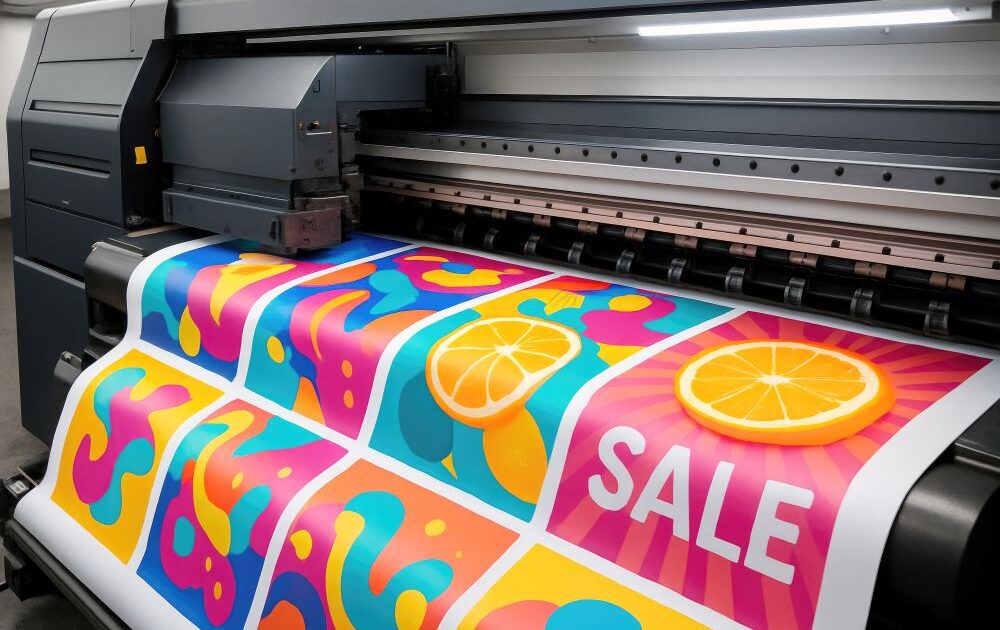
In a world saturated with digital advertising, large format printing offers something digital can’t match – commanding physical presence that’s impossible to scroll past or close with a click. From towering banners at trade shows to eye-catching rollups in retail spaces, large format printing creates visual impact that captures attention and drives results for businesses across Saudi Arabia.
What is Large Format Printing?
Large format printing, also called wide format printing, refers to printed materials exceeding standard sizes. While traditional printing handles letter-size (A4) or poster-size documents, large format printing produces graphics from a few feet to several meters in width and length. This includes banners, posters, vehicle wraps, building signage, trade show displays, and more.
Modern large format printers use advanced inkjet technology to produce high-quality, vibrant graphics on diverse materials including vinyl, fabric, canvas, rigid boards, and specialized substrates. The result is professional-grade visual communications that make powerful impressions.
Essential Large Format Products for Business Marketing
Banners: Versatile Visual Communication
Banners remain the workhorse of large format printing due to their versatility and cost-effectiveness.
Indoor Banners: Perfect for retail environments, exhibitions, conferences, and corporate spaces. Indoor banners typically use lighter materials and can feature:
- Product promotions and special offers
- Directional signage for events
- Brand messaging in offices and stores
- Informational graphics and educational content
- Seasonal or campaign-specific designs
Outdoor Banners: Designed to withstand Saudi Arabia’s challenging climate including intense sun, heat, and occasional sandstorms. Outdoor banners require:
- UV-resistant inks preventing fading
- Weather-resistant materials (typically vinyl)
- Reinforced edges and grommets for secure mounting
- Matte finishes reducing glare in bright sunlight
- Lamination for extended lifespan
Common Banner Sizes: – 2×4 feet: Table covers and small displays – 3×6 feet: Standard promotional banners – 4×8 feet: Large retail and event banners – Custom sizes: Tailored to specific spaces and needs
Rollup Displays: Portable Branding Solutions
Rollup banners (also called retractable or pull-up banners) combine portability with professional presentation, making them ideal for businesses that market in multiple locations.
Advantages of Rollups: – Quick setup (literally seconds) and takedown – Compact storage in provided cases – Professional appearance suitable for any setting – Reusable base with replaceable graphics – No tools required for assembly – Lightweight for easy transportation
Common Applications: – Trade shows and exhibitions – Retail point-of-sale displays – Conference presentations and lobbies – Office reception areas – Mobile marketing events – Sales presentations
Standard Rollup Sizes: – Economy: 80cm x 200cm (2.6’ x 6.6’) – Standard: 85cm x 200cm (2.8’ x 6.6’)
– Premium: 100cm x 200cm (3.3’ x 6.6’) – Wide: 120cm x 200cm (3.9’ x 6.6’)
Posters: Classic Visual Impact
Large format posters create strong visual statements in retail, corporate, and public spaces.
Poster Materials: – Paper: Cost-effective for temporary displays – Vinyl: Durable for longer-term use – Canvas: Premium appearance for art reproduction and upscale environments – Rigid substrates: Foam board, PVC, or aluminum for semi-permanent installations
Popular Poster Applications: – Movie and event promotions – Retail product showcases – Menu boards in restaurants – Educational and informational displays – Art reproductions – Motivational office graphics
Popup Displays: Trade Show Showstoppers
Popup displays create impressive backdrops for exhibitions and events, transforming empty booth spaces into professional brand environments.
Curved Popups: Flowing curved designs create dynamic, modern appearances that photograph beautifully and attract attention across crowded exhibition halls.
Straight Popups: Clean, geometric designs suit professional environments and create flexible modular displays when combined.
Fabric vs. Vinyl Graphics: – Fabric: Lightweight, washable, wrinkle-resistant, no glare, premium appearance – Vinyl: More economical, excellent color saturation, slightly heavier
Why Popups Excel at Events: – Create professional, complete brand environments – Large visual impact (8-20+ feet wide) – Relatively simple setup despite impressive size – Reusable for multiple events – Available with integrated lighting – Modular systems expand for larger spaces
Canvas Printing: Artistic and Decorative
Canvas printing brings fine art quality to business environments, creating sophisticated décor that reinforces brand aesthetics.
Business Applications: – Office art and décor matching brand colors – Restaurant and hospitality ambiance – Retail visual merchandising – Corporate event backdrops – Product photography displays – Brand story visualization
Canvas Benefits: – Gallery-quality appearance – Texture adds depth and interest – No glass needed (safer, lighter) – Available stretched on frames or as rolled prints – Suitable for any interior style
Strategic Applications of Large Format Printing
Trade Show and Exhibition Marketing
Exhibitions present unique marketing opportunities where large format printing is essential:
Creating Booth Presence: Your booth competes with dozens or hundreds of others for attention. Large format graphics help you:
- Stand out from distance across crowded halls
- Communicate brand identity instantly
- Showcase products and services visually
- Create professional, polished appearances
- Build credibility through quality presentation
Essential Exhibition Graphics: – Backdrop displays (popups or banners) – Rollup banners flanking the booth – Table covers with branding – Hanging signs for overhead visibility – Product posters and information graphics – Directional floor graphics
Design Tips for Trade Shows: – Bold, simple messaging readable from 10-20 feet – High-contrast colors for visibility – Large logo placement for brand recognition – Clear call-to-action – Professional photography – Minimal text (people won’t read paragraphs)
Retail and Point-of-Sale Marketing
In retail environments, large format printing influences purchasing decisions and creates shopping experiences:
Window Graphics: Storefront windows are premium advertising real estate. Effective window graphics:
- Attract foot traffic with eye-catching visuals
- Communicate current promotions and sales
- Establish brand identity and store personality
- Create privacy while maintaining visibility
- Change seasonally or for campaigns
In-Store Marketing: – Wall murals creating brand environments – Product category signage for navigation – Promotional banners highlighting sales – Seasonal décor transforming store atmosphere – Information graphics educating customers
Point-of-Sale Displays: Position promotional graphics where purchase decisions happen:
- Counter displays promoting add-on items
- Endcap posters featuring featured products
- Shelf talkers drawing attention to specific items
- Floor graphics directing traffic
- Checkout area displays maximizing last-minute purchases
Corporate Office Environments
Large format graphics in office spaces serve multiple purposes:
Brand Reinforcement: – Lobby displays welcoming visitors with brand messaging – Wall graphics in common areas reinforcing company values – Conference room décor supporting corporate identity – Motivational graphics in work areas
Wayfinding and Information: – Directional signage for large facilities – Department identification – Safety and compliance information – Visitor information graphics
Culture Building: – Team photos and achievements – Company history timelines – Mission, vision, and values displays – Employee recognition walls
Event Marketing
Temporary events require flexible, impactful graphics:
Conferences and Seminars: – Registration area branding – Stage backdrops – Directional signage – Sponsor recognition displays
Outdoor Events: – Festival banners and flags – Sports event signage – Concert and performance backdrops – Vendor identification
Product Launches: – Dramatic reveal backdrops – Product feature graphics – Brand story displays – Social media photo opportunity backgrounds
Material Selection: Choosing the Right Substrate
Different applications require different materials. Understanding options ensures optimal results:
Vinyl
Applications: Outdoor banners, vehicle graphics, window decals, temporary signage
Advantages: – Weather-resistant and durable – Excellent color reproduction – Various finishes (matte, gloss, clear) – Cost-effective for most applications
Considerations: – Can be difficult to recycle – Matte finishes reduce glare in bright light – Heavier than fabric alternatives
Fabric
Applications: Popup displays, indoor banners, premium event graphics, backlit displays
Advantages: – Lightweight for shipping and handling – Wrinkle-resistant (can be folded) – No glare issues – Washable – Premium appearance
Considerations: – Higher cost than vinyl – May require specialty finishing – Best for indoor or protected outdoor use
Rigid Substrates
Applications: Signage, displays, architectural graphics, point-of-sale
Materials: – Foam board: Lightweight, economical, indoor use – PVC/Sintra: Durable, weather-resistant, versatile – Aluminum composite: Premium, extremely durable, professional – Corrugated plastic: Economical, short-term outdoor use
Canvas
Applications: Art reproduction, decorative office graphics, sophisticated retail displays
Characteristics: – Textured surface creates artistic quality – Typically cotton-polyester blend – Requires stretching on frames or mounting – Best for indoor environments
Mesh
Applications: Building wraps, fence covers, outdoor banners in windy areas
Advantages: – Perforations allow wind to pass through – Reduces wind load on structures – Suitable for very large outdoor installations
Design Principles for Large Format Success
Creating effective large format graphics requires different thinking than standard print design:
Viewing Distance Matters
Your design should consider viewing distance:
Close viewing (0-5 feet): – Higher resolution images needed (100-150 DPI) – Detailed information appropriate – Smaller text readable (minimum 12-14pt)
Medium distance (5-15 feet): – Medium resolution acceptable (75-100 DPI) – Focus on key messages and strong visuals – Larger text for readability (minimum 24pt)
Far distance (15+ feet): – Lower resolution acceptable (30-75 DPI) – Bold, simple graphics – Very large text (72pt+) – High contrast essential
Color and Contrast
Large format graphics in Saudi Arabia’s bright environments require special attention to contrast:
- High contrast between text and background ensures readability
- Avoid light text on light backgrounds or dark on dark
- Consider how natural sunlight affects color appearance
- Test prints in actual lighting conditions when possible
- Remember that screens display colors differently than prints
Typography at Scale
Text legibility is crucial:
- Bold, sans-serif fonts generally work best for distance viewing
- Limit font varieties (2-3 maximum)
- Ensure adequate letter spacing at large sizes
- Test readability at intended viewing distance
- Avoid decorative fonts for essential information
Image Resolution
Large format printing requires appropriate image resolution:
- Calculate needed resolution based on viewing distance
- Use vector graphics (logos, simple graphics) when possible for perfect scaling
- Source high-resolution photography
- Understand that pixelation acceptable for far-viewing applications
- Consult with your printer about resolution requirements
Bleed and Safe Areas
Large format printing requires generous bleeds and safe areas:
- Bleed: Extend graphics beyond trim edge (typically 2-4 inches for large formats)
- Safe area: Keep critical content away from edges (4-6 inches)
- Account for hem/finishing when planning layouts
- Consider grommet placement on banners
Cost Factors in Large Format Printing
Understanding cost drivers helps budget effectively:
Size
Larger prints cost more due to increased material and production time. Optimize sizes to minimize waste while achieving impact.
Material
Premium materials (fabric, rigid substrates, specialty finishes) cost more than standard vinyl but may provide better long-term value.
Quantity
Per-unit costs decrease significantly with quantity. Printing multiple banners at once costs less per piece than separate orders.
Turnaround Time
Rush jobs typically carry premium pricing. Plan ahead when possible to avoid rush fees.
Finishing
Hemming, grommets, pole pockets, lamination, and mounting add to costs but often prove essential for professional results and durability.
Design Services
Professional design ensures effective graphics. Factor design costs into project budgets or provide print-ready files following printer specifications.
Working with Large Format Printers in Saudi Arabia
Maximize success by partnering effectively with your printer:
Preparing Files
- Follow printer’s file specification guidelines
- Use appropriate color modes (CMYK for print, not RGB)
- Convert fonts to outlines/paths
- Include bleed and crop marks
- Save in recommended formats (PDF, EPS, AI)
Requesting Proofs
Always request proofs before final printing:
- Digital proofs for layout and design approval
- Color proofs for accurate color matching
- Physical samples of materials when possible
Communication
Clear communication prevents costly errors:
- Confirm dimensions and specifications in writing
- Discuss viewing conditions and environment
- Share intended application and installation details
- Provide reference samples if matching existing materials
Measuring Large Format Printing ROI
Track effectiveness to justify investments:
Event Metrics: – Booth traffic at trade shows – Lead generation numbers – Brand awareness surveys – Social media mentions and photos
Retail Metrics: – Sales during promotion periods – Foot traffic increases – Specific product performance – Customer inquiries
Long-term Indicators: – Brand recognition improvements – Market share changes – Customer acquisition costs – Campaign performance comparisons
Sustainability Considerations
Eco-conscious businesses should consider environmental impacts:
- Choose recyclable or biodegradable materials when possible
- Use latex or eco-solvent inks
- Design for longevity to reduce replacement frequency
- Work with printers implementing sustainable practices
- Properly dispose of or recycle old graphics
Conclusion
Large format printing offers unmatched versatility for businesses seeking to make bold visual statements. Whether you’re attracting trade show attendees, promoting retail sales, building corporate culture, or marketing at events, large format graphics create the commanding presence that digital advertising simply cannot match.
The key to success lies in understanding your objectives, choosing appropriate materials and sizes, investing in quality design, and working with experienced printers who can guide you through the process. In Saudi Arabia’s competitive business environment, where visual presence matters significantly, large format printing provides powerful tools for brands ready to stand out and be noticed.
Start small if needed – a few rollup banners or retail posters – and expand your large format arsenal as you see results. The investment in professional, high-quality large format graphics pays dividends through increased visibility, enhanced brand perception, and ultimately, improved business outcomes. In a marketplace where attention is the scarcest resource, large format printing ensures your message gets seen, remembered, and acted upon.